When is the best time to visit Casablanca?
Updated October 20, 2026 · 4 min read
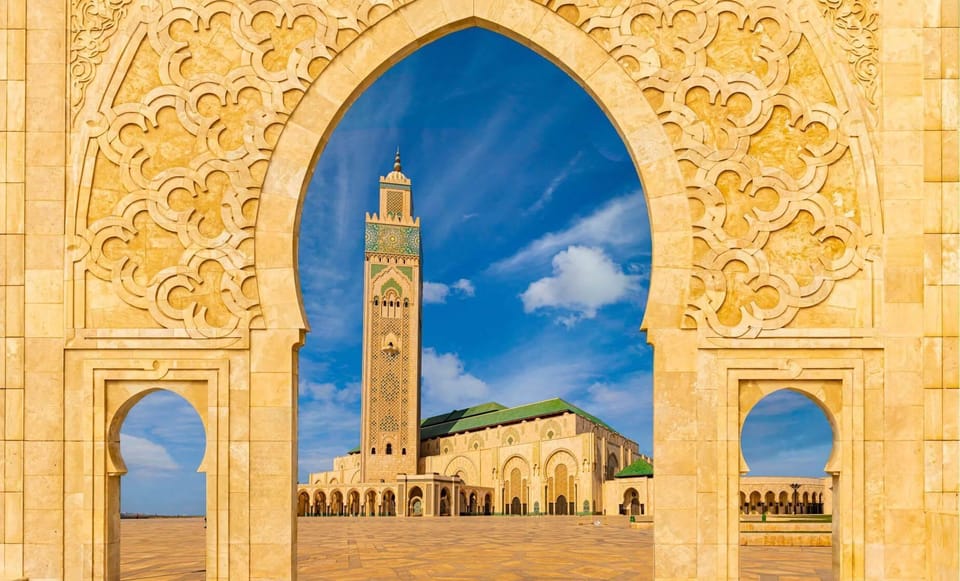
For most visitors, April to June or September to October is the best time for Casablanca. Days are generally mild to warm, the Atlantic keeps the heat below inland-Morocco levels, and you can combine the Hassan II Mosque, the medina and the Corniche without building the day around rain. The driest months are June to August, which suit travellers who enjoy warmth but are not the obvious choice for long city walks; for cooler walking weather choose April or October.
If you want an efficient first morning, the city tour with Hassan II Mosque entry ticket takes 4.5 hours, starts at €36 and is rated 4.7 from 1,551 reviews.
See availability for the city tour with mosque entry
Spring: the easiest balance
Casablanca’s official climate normals put average daytime highs at 19.7°C in March, 20.6°C in April and 22.7°C in May. Rain falls on an average of nine days in March, eight in April and five in May. That makes late April and May especially useful: comfortable for walking, yet noticeably drier than winter.
Spring is also a sensible season for a walk through the medina and along the Corniche. Bring a light layer for the ocean breeze rather than assuming that Morocco means desert heat.
Summer: dry, warm and exposed
June to August is extremely dry in the long-term averages: 2.5 mm of rain in June, 0.5 mm in July and 0.4 mm in August. Average daytime highs rise from 24.6°C to 26.7°C. Those figures look gentle, but the mosque esplanade and long waterfront stretches have little shade. Start outside sightseeing early and save the hottest part of the day for lunch or an indoor stop.
Summer works well if predictable dry weather matters most. It is less attractive if your plan is a four-hour walking tour or if heat makes you tire quickly.
Autumn: September wins for warmth
September keeps an average high of 25.8°C and has only three rain days. October cools to 24.3°C, while average rainfall jumps to 45.3 mm over seven days. Pick September for summer-like conditions; pick October for cooler streets, accepting a greater chance of showers.
Winter: workable, but keep a Plan B
From November to February, average highs remain between 17.6°C and 21°C. This is not a frozen city, but it is the wetter period: November averages 82.5 mm of rain, the highest monthly figure in the climate table. A wet Atlantic day can make the Corniche a poor use of time even when the temperature seems mild.
Winter visitors should put the mosque first and leave the waterfront flexible. Check the mosque foundation’s current visit times, particularly on Fridays and during Ramadan, because operating times are not a climate fact and can change.
The clear choice
Choose May for the best overall compromise, September for warmth with little rain, and January or February only if low-season timing matters more than outdoor certainty. Whatever the month, the €36 city tour is the strongest one-booking option when you want the mosque interior and the main city sights handled together.